


3 Non-Negotiable Outdoor Principles
(Accompanying video can be found here: https://youtu.be/8g0QMOhXWtw)
What are the three core principles of outdoor adventure?
The three non-negotiable principles of outdoor adventure are:
1) Respect Nature's Indifference (accepting human physical limits in the wild),
2) Gather Trail Knowledge (researching weather, terrain, and route reports, etc.)
3) Align Your Tools (selecting clothing, footwear, and survival gear based on your research).
Whether you are heading out for a quick day hike, planning a multi-day backpacking trip, or navigating trails as an adaptive hiker, staying safe in the backcountry comes down to preparation long before you step onto the trail.
As a 62-year-old amputee, former Scout Master, and lifelong outdoor enthusiast, I’ve navigated my share of demanding wilderness routes. Over the years, I’ve learned that staying safe isn't about luck—it's about building a solid foundation.
Principle 1: Nature Doesn't Care About You
Why is mindset the most important factor in wilderness survival?

Recognizing that nature is indifferent to human existence is the starting point of all outdoor planning. Mother Nature is beautiful, but she can be ruthless. She does not care about your background, occupation, income, political beliefs, or personal identity.
When evaluated from a physical standpoint, humans are ill-equipped for raw wilderness environments:
No natural armor or camouflage: We lack thick hides, protective scales, or natural blending abilities.
No biological weaponry: We have no sharp claws, pronounced fangs, or wings.
Poor thermal regulation: We have no thick fur to protect against freezing conditions and lose vital water through sweat.
Limited speed: We cannot outrun most mid-sized wilderness predators.
Accepting our natural physical limitations isn't about fear; it's about staying grounded in reality. Principle Number One forces you to leave your ego at the trailhead, respect environmental hazards, and prioritize risk management.
Principle 2: Brains—Use Knowledge as Your Ultimate Edge
How do you research a trail before hiking?

Before setting foot on a trail, gather up-to-date information regarding terrain elevation, weather forecasts, recent trail reports, group fitness limits, and hazard alerts.
While humans lack biological defenses, our evolutionary advantage is our brain. We have an unparalleled ability to learn, synthesize information, analyze risks, and pass knowledge along to others.
Use Principle Number Two to answer five critical trip-planning questions:
Where are you going? What are the terrain features, elevation gains, and trail conditions?
What will you be doing? Is this a casual walk, an adaptive day hike, or a technical trek?
What is the weather forecast? Are there sudden shifts in temperature, excessive heat, or precipitation predicted?
Who will you be with? What are the physical capabilities and experience levels of your hiking partners?
What do recent trail reports say? Are there washed-out bridges, fallen trees, or wildlife encounters logged in recent online reports or videos?
Principle 3: Tools—Align Your Gear to Your Trail Knowledge
How do you choose the right hiking and backpacking gear?
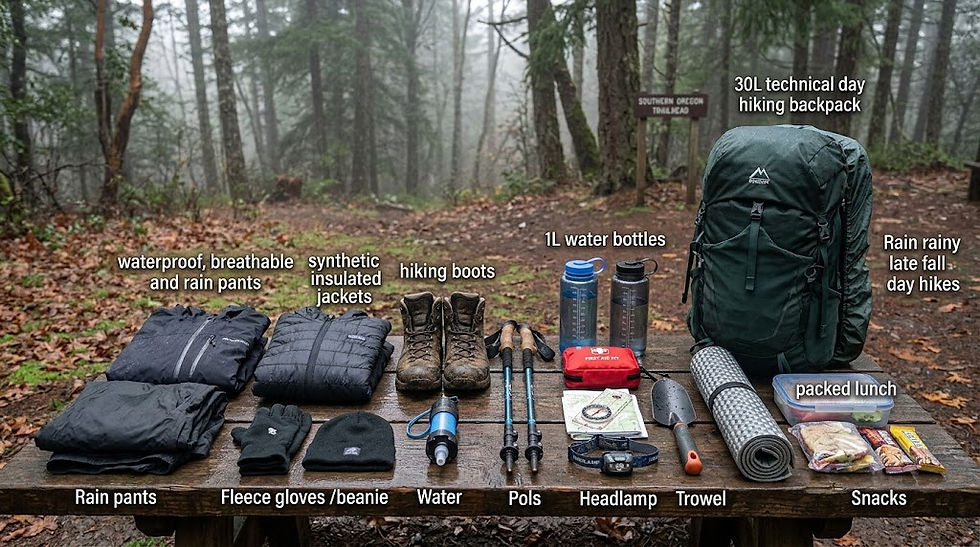
Choose outdoor gear by matching your clothing layers, footwear, hydration systems, and safety essentials directly to the weather, terrain, and hazards identified during your research. Knowledge dictates tools.
Humans base their existence on tools—from the clothes on our backs to the devices we use to read trail maps. But carrying the wrong gear adds useless pack weight.
Once you have assessed the environment (Principle 1) and collected your trip data (Principle 2), select your equipment accordingly.
Example:
Gear Category | What to Pack Based on Knowledge |
Footwear | Choose high-top boots for rocky terrain or lightweight trail runners for established trails. Waterproof boots vs. breathable boots. |
Clothing Layers | Pack moisture-wicking base layers, insulation, rain jackets, or sun hats based on temperature and UV exposure. |
Hydration & Food | Determine water storage (2 liters or 4), filtration tools, and calorie intake based on route length and heat (stove, pot, snacks, carbs to protein ratio, etc.). |
Trail Protection | Bring sunblock, tick repellent, gloves, sun hat, or hiking umbrella, depending on environment and season. |
Summary Checklist for Outdoor Preparation
Before heading out on your next adventure, run through this quick recap:
Principle 1 (Mindset): Remember that nature is indifferent. Respect environmental hazards and accept human physical limits.
Principle 2 (Knowledge): Fill your brain with details regarding the where, what, when, how, and why of your trip.
Principle 3 (Tools): Select your footwear, clothing layers, water filtration, and gear strictly based on what your research revealed.
Frequently Asked Questions (FAQ)
What is the most important rule for hiking safety?
The most important rule for hiking safety is recognizing that nature is indifferent to human presence. Respecting environmental hazards forces hikers to rely on risk management, situational awareness, and adequate preparation rather than luck.
How do I prevent trail emergencies before I leave home?
You can prevent trail emergencies by conducting thorough pre-trip research. Check current local weather forecasts, read recent trip reports, study topographical maps, and communicate route plans with a family member or friend.
Connect with Amputee Outdoors
What preparation steps do you take before stepping onto the trail? Let me know in the comments below!
For more adaptive hiking guides, outdoor survival mindset strategies, and practical gear evaluations, Subscribe to the Amputee Outdoors YouTube Channel and explore my latest trail articles on AmputeeOutdoors.com. See you out on the trail!


Comments